Your Bag

Your Bag is empty

Dunlop Pro Squash Balls - Tube of 3

by
Code WH814
Regular price £10.99
Unit price
per
(0 in Bag)
Visa American Express Mastercard PayPal Apple Pay Google Pay
Buy more, save more

Complete your kit

Bundle total £10.99

Dunlop Pro Squash Balls - Tube of 3
£10.99

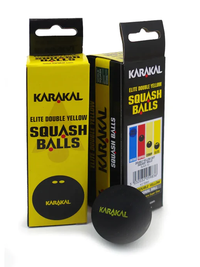
The Dunlop Pro are double yellow dot balls suitable for advanced players who seek unrivalled durability and playability ensured by the N-1SR Molecular Technology. They have a standard size of 40mm and are the official balls of the World Squash Federation, Professional Squash Association and Women's Squash Association. The Dunlop Pro squash balls offer the lowest bounce in the range and are sold in a 3-ball tube.

UK:

  • FREE tracked delivery (2-3 business days) on orders of £40 or more!
  • Upgrade to Expedited 24hr tracked delivery at checkout.

International:

  • Shipping calculated at checkout.
  • All packages are fully insured for your peace of mind.

Dispatch:

  • Same-day dispatch for weekday orders placed before 2pm (excluding holidays).
  • Weekend orders ship on Monday.
  • 24hr deliveries on Friday may arrive on Monday.
  • Please allow 7 days for delivery before contacting us.
What do the coloured dots on squash balls mean?

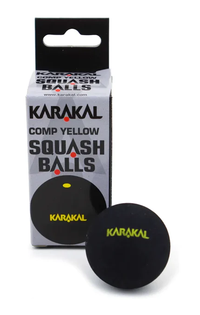
The dot tells you how much the ball bounces. Double yellow is the slowest with the least bounce, and is the ball used in competitions and by strong club players. Single yellow bounces a little more, red more again, and blue or white dot balls bounce the most, which gives beginners time to reach the ball.

Which squash ball should I start with?

Most new players and juniors are better off with a blue, white or red dot ball, because a double yellow ball dies quickly unless it is hit hard. Move down the dots as your rallies get longer. Mini balls are made for young children learning on a smaller scale.

Why do squash balls need warming up?

A squash ball is hollow rubber, and it only bounces properly once it is warm. A cold double yellow ball barely leaves the floor, so players knock up for a few minutes before a game. The slower the ball, the more warming up it needs.